
Archivio Museo Egizio C01834
Team
Principal Investigator

Dr Aneta Skalec is a papyrologist, archaeologist, and Roman lawyer. She graduated from the University of Warsaw (in Archaeology and Law) and is an assistant professor at the Institute of the Mediterranean and Oriental Cultures of the Polish Academy of Sciences in Warsaw. Since 2015, she has coordinated the Polish-Italian cooperation within the Warsaw Mummy Project and, since 2017, served as a member of the Gebelein Archaeological Project. From 2017 to 2019, she was an assistant professor of Roman Law at the Jan Długosz University in Częstochowa. Between 2022 and 2024, she was a post-doctoral researcher within the ERC NOTAE Project funded by an ERC Advanced Grant led by Prof. Antonella Ghignoli at the Sapienza University in Rome. She has authored several papers on papyrology and Egyptology, focusing on papyrological and archaeological sources as well as on the diplomatics and the use of graphic symbols on late-antique papyri from Syene and the Hermopolite nome.

Dr Wojciech Ejsmond is an archaeologist specialising in ancient Egypt, graduated from the University of Warsaw. He is an assistant professor at the Institute of Mediterranean and Oriental Cultures of the Polish Academy of Sciences in Warsaw and a post-doctoral fellow at the Institute of Archaeology and Cultural Anthropology, Department of Egyptology, Rhenishe Friedrich Wilhelm University of Bonn (postdoc project financed by the Polish National Agency for Academic Exchange (BEKKER Programme)). He directs an archaeological mission at Gebelein in southern Egypt, exploring various aspects of provincial culture in the Pharaonic civilisation. Additionally, he co-directs the Warsaw Mummy Project, an interdisciplinary investigation performed on ancient Egyptian mummies preserved in the National Museum in Warsaw. His research interests include ancient Egyptian provincial cultures, funeral customs, mummy studies, and the origin of ancient Egyptian civilisation. Wojciech was honoured with the START Stipend for promising young scholars, granted by the Foundation for Polish Science, and recognised by the Institute De Republica for outstanding achievements in the humanities.
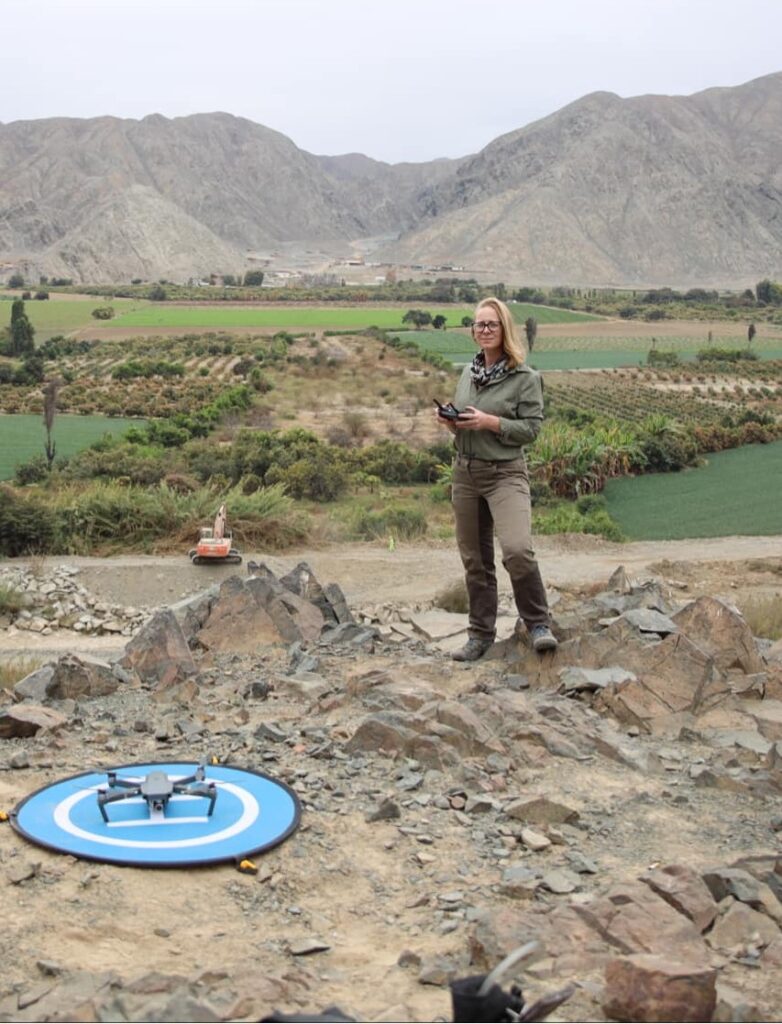
Dr Julia Chyla is an archaeologist specialising in GIS and digital archaeology, graduated from the University of Warsaw. She is an assistant professor at the Faculty of Archeology of the University of Warsaw, editor-in-chief of the “Archeowieści” portal, active member of the DARIAH-PL consortium and co-founder of CAA PL, where she promotes the development of digital methods in archaeology. She conducts research both in Poland and abroad, including Peru, Egypt and Israel.

Jakub Stępnik, M.A., is an archaeologist specialising in the use of 3D visualisations for documenting excavations and related data processing. His research focuses on archival documentation and innovative fieldwork techniques. A graduate of the Adam Mickiewicz University in Poznań and the Jagiellonian University in Kraków, he is currently embarking on his doctoral studies, focusing on applying the technique of 3D analysis to early-medieval cremation burial mounds. Additionally, he actively participates in several archaeological projects involving photogrammetry and 3D modelling based on new and archival data. He also co-founded the Chodlik Archaeological Film Review and is an amateur film director engaged in social archaeology.

Łukasz Mikołaj Suski is a classicist, historian, and Mediterranean studies specialist, currently completing his Master’s at the University of Warsaw. His research focuses on ancient geography, with a particular emphasis on Strabo’s Geography and its treatment of Egypt and the surrounding regions. Throughout his academic career, he has participated in international exchanges at universities such as Universidad de Alicante, Alma Mater Studiorum – Università di Bologna, and Sapienza University in Rome. Furthermore, he has traveled extensively for scholarly purposes, including archaeological expeditions in Tunisia, Greece, Turkey, and Cyprus as well as being awarded scholarships in the Netherlands and Egypt. A central aspect of his academic journey is his deep passion for ancient languages, particularly Latin, Greek, and Ancient Hebrew, which he not only studies and teaches, but actively speaks.